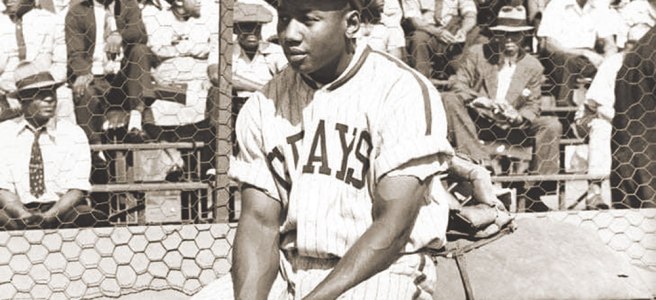
Just over a week ago, Major League Baseball announced that statistics from Negro Leagues between 1920 and 1948 will be absorbed into official MLB records, a long overdue acknowledgement and inclusion of some of the best to ever play. (And many of whom you may not have heard, who were damn good players…)
Of course, when following threads of topics such as this on social media, you’re guaranteed to run into a combination of bots, racists, and folks who wear their ignorance proudly. Yet in this case, it seemed much more than that – I really got the impression there is not an insignificant percentage of baseball fans who are skeptical of the inclusion of Negro League players into American and National League records.
Although my experience has taught me that trying to reason with the proudly ignorant is a waste of time, I’m going to share some information that might clarify a few things for those who may be seeking understanding. I don’t think there is such a thing as a short and comprehensive history discussion, but I’ll do my best to keep it brief:
In 1945 and 1946 the Brooklyn Dodgers had good teams, but not good enough to overcome the St. Louis Cardinals who were the powerhouse of the National League. Entering the 1947 season, led by an all-time great in Stan Musial, St. Louis had won four of the last five NL pennants and were coming off a 98-win season (in only 154 games) in 1946.
You know what came next. Dodgers General Manager Branch Rickey felt that signing players from the Negro Leagues to join the Dodgers would give his team the push over the top to overtake the Cardinals. Rickey started by adding Jackie Robinson in 1947 – Jackie won the Rookie of the Year award, and the Dodgers did overtake every team in the NL and won the pennant.
(Side note: Bill Veeck, the owner of the American League’s Cleveland Indians at the time, added former Negro League players Larry Doby and Satchel Paige to his squad in 1947 and 1948 respectively. The Indians, getting significant contributions from both former NeL players, won their first World Series in 29 seasons in ‘48. But because the AL by and large didn’t embrace integration fully for another decade, we’re going to limit our chat to the NL.)
The Dodgers then added former NeL players Roy Campanella in 1948 and Don Newcombe in 1949. Adding Jackie, Campanella and Newcombe to a team that already had Pee Wee Reese and Duke Snider led the team to a stretch of nine seasons in which the Dodgers won the NL pennant six times and finished second twice.
That short stretch in the late 1940’s was a turning point in history. It was at some point early on in this process – no one knows for sure exactly when, that the General Managers of other NL teams – well, the ones who were familiar with Darwin, anyway – told their scouts behind closed doors: “We’re going to need some thugs.”
The Dodgers crosstown rival NY Giants added former NeL players Hank Thompson in 1949, Monte Irvin in 1950, and some skinny teenage left fielder named Mays in 1951. The Giants, having not won anything in 15 years, won two of the next four NL Pennants.
The Braves, who had lost to Cleveland (who had Larry Doby and Satchel Paige) in the 1948 World Series, added Sam Jethroe in 1950 then, after fearing potential dynasties in both NY teams went all in on decreasing the caucasity of their roster. Bill Bruton arrived in ’53 and Henry Aaron and Wes Covington joined in within two seasons on the Braves roster. After their arrival the Braves won the NL pennant twice with two second place finishes over a five-year stretch.
The Cubs would begin their integration in ’53, with Cincinnati, Pittsburgh and St. Louis integrating in ’54. The Phillies, playing “up south” in the city of brotherly love (lol), were the last NL team to integrate, waiting until 1957 to welcome a non-Caucasian player.
If you’re curious, Philadelphia wouldn’t win an NL Pennant until 1980, and the Cardinals – despite having Stan Musial in his prime for close to another decade – went 19 seasons without an NL pennant. They would win one in 1964 – when Bob Gibson, Bill White, Lou Brock, and Curt Flood were four of their top five WAR producers.
“Hey, there are many factors involved in teams’ roster construction, all of that nonsense about diversity and inclusion leading to success could just be a coincidence!” you may be thinking, if you’ve suffered acute head trauma.
But I’ll play along. We’ll pick up that conversation later and look at individual player comparisons and accomplishments.
Spoiler: It gets much worse for the “the stats should be kept separate” crowd.
FYI, “Opening Day” by Jonathan Eig about Jackie and the 1947 season is phenomenal (as is everything by Eig) and “Our Team” by Luke Epplin about Doby, Paige, Veeck, and Bob Feller and the 1948 World Series Champion Cleveland Indians is one of the best baseball books I’ve read in years – if you’re interested.
Did I miss something? Let me know. Leave a comment below, or yell at me @mybaseballpage1 on Twitter and/or the “My Baseball Page” on Facebook.

Buy me a coffee?
If you like the blog and would like to see more of it, feel free to buy me a coffee – I prefer the bougee stuff, but I’ll take a Wawa if you’re buying. (Shrugs.) It may not seem like much, but every little bit goes a long way toward keeping the blog rolling. Thanks in advance!
$1.98
 mybaseballpage.com