
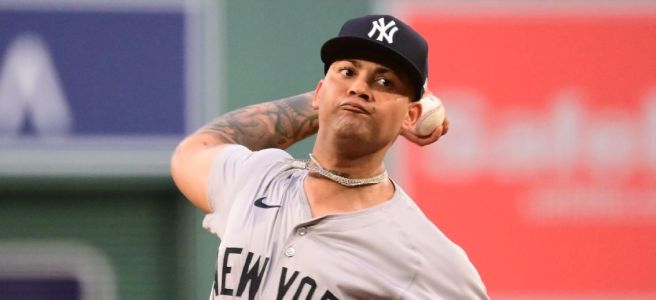
On multiple occasions in May I wrote right here in these pages in the clouds that the Yankees pitching was not that good. That flew in the face of the barrage of “best staff in baseball!” proclamations that came from Yankees state TV on a nightly basis. Although to be fair to Simpleton Summer Camp (the YES Network), any and every outlet that covered the Yankees at the time went out of its way to tell us how great the Yankees pitching was, and overwhelmingly, the claim was based on “ERA”.
My position was/is ERA is a dumb statistic (more on that in a minute*) and that by measures that excluded team defense and randomness, Yankees pitching was not in fact good, and that things would change for the worse.
Since May 26th (my last post about Yankees pitching), the Yankees have allowed the 4th most runs per game in MLB, despite playing stellar team defense over that stretch. Do you want to know why?
Because their pitching is not good.
I’ve posted the numbers dozens of times previously, so there’s no need to rehash, but here’s the bottom line: When pitchers consistently allow hard contact, as the Yankees pitchers have all season, eventually, the other team will score a lot of runs. We are not splitting atoms here.
Across MLB currently, the Yankees staff ranks 25th in xFIP, 19th in K-BB%, while allowing the second highest average exit velocity and eighth highest hard-hit percentage.
Here’s the important part: These are not recent developments. Those numbers have been between average and below average all season.
So, the only way in which you can be surprised by the recent shellings and butt whoopins is if you believed the ERA myth.
The recent return of Gerrit Cole will certainly help, hopefully we’ll see Clarke Schmidt again soon and there’s always the opportunity to upgrade at the trade deadline. That said, don’t fall for the narrative that recent events have been a speed bump for the staff – it’s what they’ve been for a while.
*Back to ERA. ERA was originally developed as a measurement of team offense. I.e., how many runs did an offense “earn” without the benefit of help from the fielders. Therefore – for that and a dozen other reasons – using it to measure a pitcher’s effectiveness over a century later when we have other options is just damn silly.
For more on that and tons of other interesting facts about the history and evolution of baseball statistics, read “The Numbers Game: Baseball’s Lifelong Fascination with Statistics”, by Alan Schwarz. It’s the best book on baseball statistics I’ve ever read, and I’ve been reading them since Bill James’ abstracts in the 80s.
Did I miss something? Let me know in the comments or yell at me @mybaseballpage1 on Twitter and/or the “My Baseball Page” on Facebook.

Buy me a coffee?
If you like the blog and would like to see more of it, feel free to buy me a coffee. I prefer the bougee stuff, but I’ll take a Wawa if you’re buying. (Shrug.) It may not seem like much, but every little bit goes a long way toward keeping the blog rolling. Thanks in advance!
$1.98
 mybaseballpage.com